

When an OEM manufacturer approaches an LED module supplier, one of the first questions is whether the module has already been designed.
Some customers have an established LED PCB with approved production files. They need the module manufactured according to their existing design.
Others have defined the requirements of their lighting product but still need the LED selection, electrical configuration and PCB layout to be developed.
The difference between build-to-print and new design is not simply whether drawings are available. It is which technical decisions have already been made, who is responsible for the remaining design work, and who approves changes.
At NKT, these differences determine how we review an inquiry and what information is needed before the project can proceed.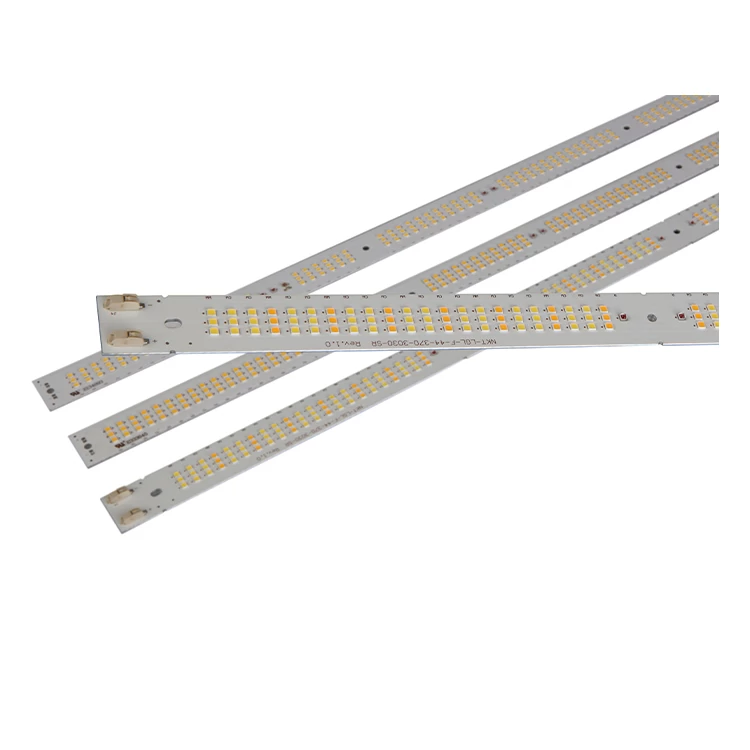
Three Possible Starting Points
| Project starting point | Available information | NKT's role |
|---|---|---|
| Build-to-Print | Customer-approved PCB design, Gerber files, BOM and placement data | Review manufacturing information, clarify issues and produce according to the confirmed design |
| Existing PCB Without Complete Files | Physical module, photographs or partial drawings | Evaluate the reference, identify missing information and determine what must be recreated or redesigned |
| New Design | Product dimensions, electrical conditions and performance requirements | Propose LED components and configuration, develop the PCB design and support prototype validation |
These categories describe the engineering work required, not different levels of product quality.
An established design may still require careful manufacturing review, while a new module design may be relatively straightforward.
Build-to-Print: The Design Is Defined, but Production Information Must Be Reviewed

In a build-to-print project, the OEM has already established the PCB design and selected the main components.
The customer typically supplies:
Gerber files defining the PCB layout
An approved Bill of Materials (BOM)
Pick-and-Place data for component positions
Relevant assembly or mechanical drawings
Applicable electrical, optical and inspection requirements
Before production, these documents need to be reviewed together.
Gerber files describe the PCB, but they do not independently confirm that every BOM item, component position and manufacturing requirement is consistent.
For example, a component part number may require confirmation against the specified PCB footprint. A listed LED or connector may also have an availability issue that affects production planning.
NKT reviews customer-supplied manufacturing information and communicates with the customer when an apparent inconsistency or unreasonable requirement is identified.
A manufacturing review is not permission to redesign the customer's PCB or change specified components without approval.
If a customer specifies a particular LED or connector, NKT follows that requirement. When an alternative needs to be considered, the proposed change is discussed with the customer before implementation.
The same principle applies to design revisions. If updated Gerber files, a revised BOM or changed component positions are provided, it is important to establish which documents represent the current approved design.
Otherwise, even individually correct files may describe different versions of the same product.
For established OEM products, component and design consistency can be particularly important when the original module has already been validated as part of a finished product.
Build-to-print production therefore starts with an approved design, but still requires clear communication about manufacturing information and any proposed changes.
New Design: Engineering Decisions Begin With Product Requirements
A new-design project starts before the LED PCB has been fully defined.
Instead of manufacturing files, the OEM may provide:
Available module dimensions and mounting requirements
Existing power-supply or driver parameters
Required luminous flux or approximate power
CCT, CRI or wavelength requirements
Application-specific constraints
NKT evaluates these requirements and prepares a preliminary LED module proposal.
This may include the proposed LED model and quantity, estimated operating voltage and current, circuit configuration, expected optical performance and quotation.
At this stage, the objective is to establish a practical design direction that the customer can evaluate.
Once the customer agrees to proceed, the detailed PCB layout can be prepared for review and confirmation before samples are developed.
Prototype measurements can then be used to evaluate actual module performance against the agreed requirements.
The customer remains responsible for confirming how the module performs within the complete product, including its power supply, housing and operating environment.
For a more detailed explanation of this development process, see how OEM requirements become a custom LED module design.
Unlike build-to-print, the LED model, quantity and circuit arrangement are not necessarily fixed when the initial inquiry is received. They are part of the engineering proposal.
An Existing PCB Is Not Necessarily a Build-to-Print Design
NKT has also handled projects in which customers had an existing LED module but no complete set of original production files.
A physical PCB can provide useful information about its dimensions, mounting arrangement, components and connections.
When appropriate operating conditions are known, an operational sample may also provide a reference for electrical and optical measurements.
However, the sample does not automatically reveal every original component specification or provide production-ready Gerber, BOM and placement data.
The project may therefore require additional evaluation, reconstruction of design information or development of a replacement module.
The important question is whether the customer needs the original design reproduced or simply requires a new module that remains compatible with the existing product.
For more about this distinction, see evaluating an existing LED module from a photo or physical sample.
Design Approval and Change Control Matter in Both Approaches
Whether an OEM supplies the design or asks NKT to develop one, the project needs a clear reference for approval.
Three questions are particularly useful:
1. What is the approved design or specification?
For build-to-print, this normally means identifying the correct production-file versions and approved components.
For new development, it means confirming the agreed technical requirements and subsequently approving the relevant design and prototype.
2. Which requirements can be adjusted?
Some customers specify exact component manufacturers and part numbers.
Other projects allow NKT to propose suitable alternatives during development.
That distinction should be clear before component selection or purchasing decisions are made.
3. What happens when something changes?
A different LED, revised connector or updated PCB layout may affect the module's electrical, optical or mechanical characteristics.
Depending on the change, a revised quotation, updated documentation or additional sample confirmation may be necessary.
These questions are relevant not only during initial development but also when an existing OEM module enters repeat production.
Is Build-to-Print Always Faster or Less Expensive?
Not necessarily.
A complete and consistent production package can reduce the engineering work required before manufacturing.
However, missing documents, component availability problems or conflicting revisions may still require clarification.
Likewise, a new design may involve additional engineering and prototype work, but its requirements can sometimes be evaluated sufficiently to prepare a preliminary proposal before every mechanical detail is finalized.
The appropriate quotation and development schedule depend on the actual information available and the work required.
For an OEM buyer, accurately describing the project's starting point is more useful than assuming one approach will always be faster.
What Should an OEM Send to NKT?
If you already have an approved LED PCB design, send the available Gerber files, BOM, Pick-and-Place data and relevant assembly or inspection requirements. Identify any components that must remain unchanged.
If you have an existing module but no complete design files, send photographs or a physical sample, together with known electrical conditions, mechanical requirements and performance information.
If you need a new LED module, begin with the product dimensions, driver or power-supply conditions and the required optical performance.
A completed PCB layout is not necessary for an initial new-design inquiry.
The objective is to establish what is already defined, what still needs engineering work and what requires customer confirmation.
NKT supports OEM LED module projects through production-file review, component selection, PCB design support, prototype evaluation and manufacturing coordination.
Whether your project starts with approved production files or a new product requirement, we can review the available information and discuss the appropriate next step.