


Designed Around Equipment Requirements
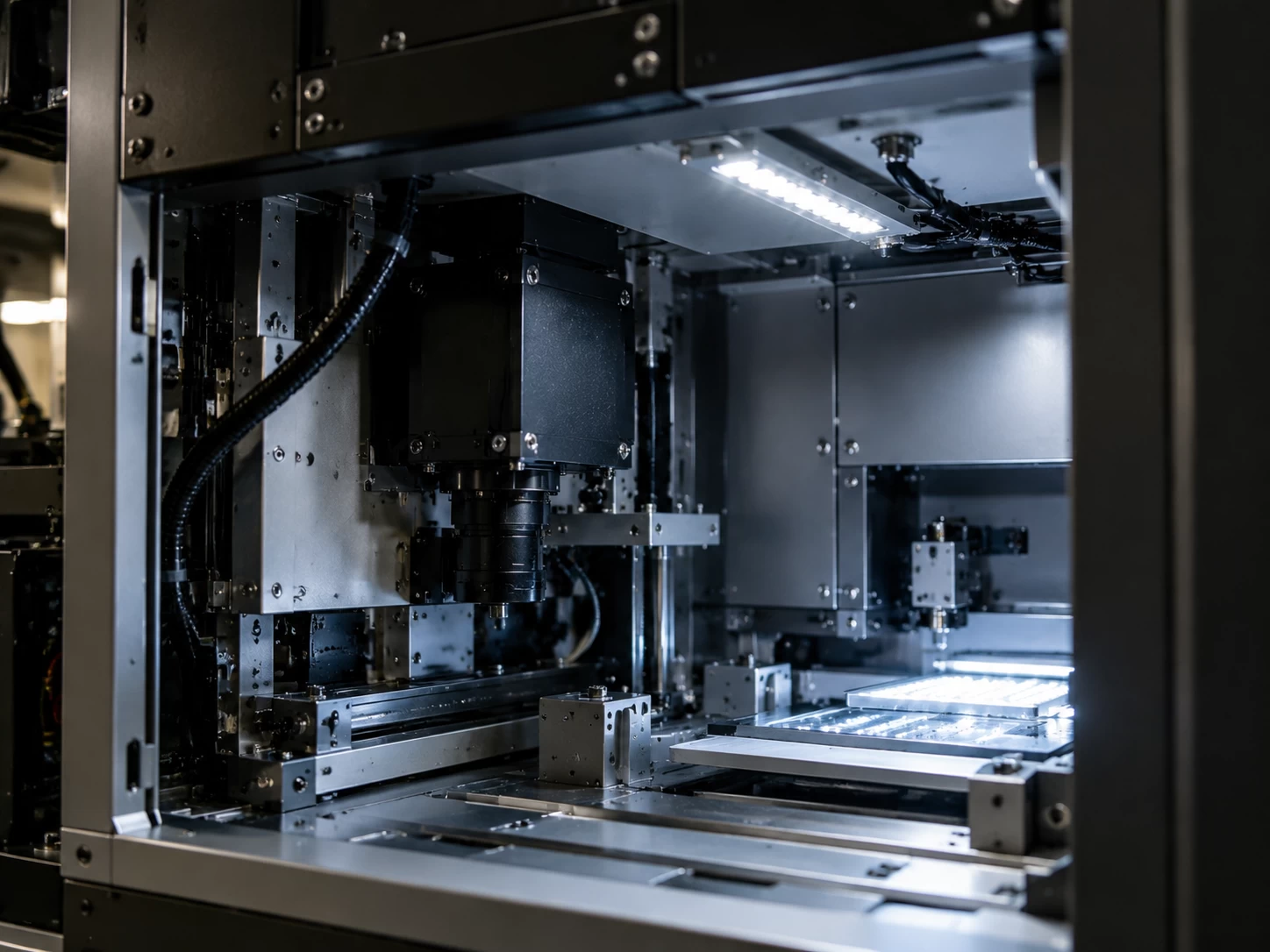
Industrial equipment places specific mechanical, electrical, and optical demands on LED modules. NKT considers these requirements when developing a suitable module configuration.
Mechanical Integration
We review module dimensions, mounting points, and clearances against the available space inside the equipment.
Electrical Compatibility
Driver voltage and current requirements guide the LED circuit configuration and operating conditions.
Optical Performance
Brightness, color, and wavelength targets guide LED selection, quantity, and placement.
Connections & Components
We review connector type and position, along with specified components and BOM requirements.
Industrial LED Modules in Practice
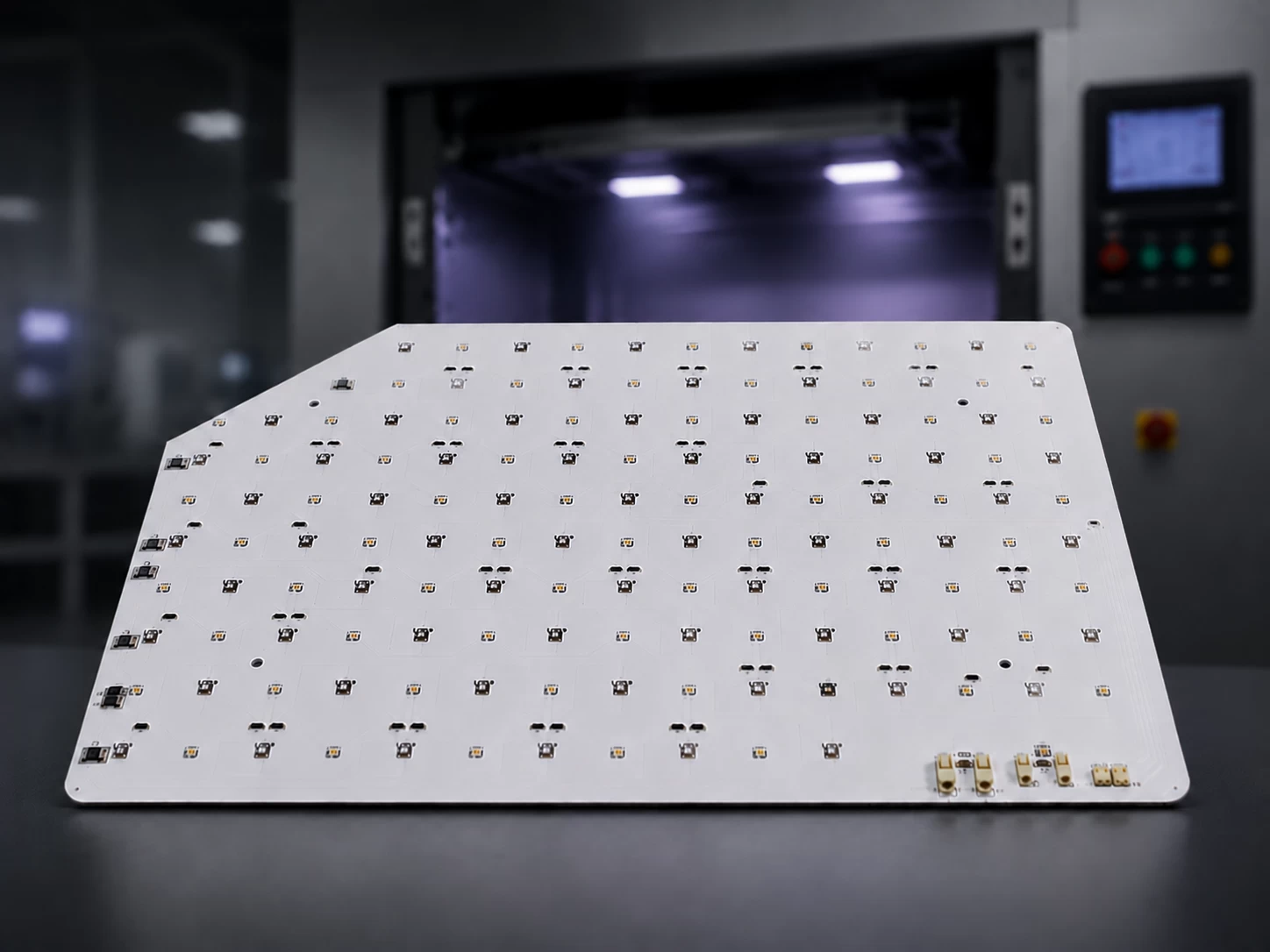
Custom UV LED Modules for Industrial Curing Systems
An industrial 3D printing equipment project required a custom UV curing LED module combining 405 nm UV LEDs and 450 nm blue LEDs in two independently operated channels.
NKT reviewed the initial LED quantities and electrical configuration, then adjusted the PCB layout and connector positions as the equipment design evolved.
The project demonstrates how wavelength requirements, electrical design, and mechanical integration must be considered together in industrial UV curing applications.
Module Testing & Equipment Validation
Module-level testing and final equipment validation serve different purposes in industrial OEM applications.
Module Checks
NKT checks LED operation, voltage, current, and relevant optical characteristics during prototype evaluation. Production inspection includes 100% power-on checks, with optical testing and 8-hour burn-in performed on selected samples where applicable.
Equipment Validation
After integration, the OEM customer verifies thermal performance, mounting conditions, environmental suitability, and any required certifications under actual equipment operating conditions.